Unlock Vintage Charm: Using Keys Decorative Elements
There is a specific feeling you get when you hold a skeleton key. It is not just about the metal; it is about the potential of what is locked away. In the world of design, we often search for that specific feeling—a sense of mystery, history, and narrative depth. If you have been looking for a way to inject that antique soul into your digital work, the Keys Decorative Elements set is a tool that deserves a spot in your creative arsenal. It is not just a collection of vectors; it is a bridge to the Victorian era, offering a tactile aesthetic that modern, clean-line design sometimes lacks.
More Than Just Padlocks: The Aesthetic Appeal
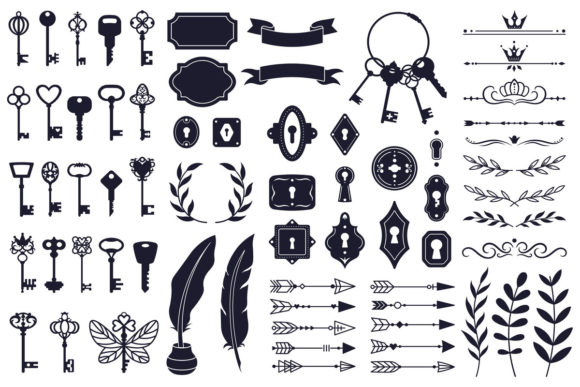
At first glance, you might think of this as a simple clipart bundle. That would be a mistake. The visual personality of Keys Decorative Elements lies in its intricate detailing. We are talking about retro-victorian imagery that carries the weight of history. You will find ornate padlocks, skeleton keys with complex wards, and stylized arrows that feel like they were etched into leather-bound journals. This set captures the grit and elegance of an era where craftsmanship was paramount.
The "retro" aspect here is crucial. This is not a sterile, digitized version of an object. The lines have character. Whether you are using the EPS10 vector file for infinite scalability or the 72ppi JPEG preview to mock up ideas, the texture comes through. It feels like a premium font for graphic assets—curated, intentional, and rich with atmosphere. For anyone working on branding projects that require a touch of steampunk, gothic, or vintage Americana, these elements provide an immediate visual shorthand for "old world" quality.
Strategic Applications: Where These Elements Belong
Understanding where to deploy these graphics is just as important as having them. As a designer or business owner, you need assets that work hard. Keys Decorative Elements are incredibly versatile, but they shine brightest in specific contexts where storytelling is the priority.
Branding and Packaging Design
If you are developing a brand identity for a coffee roaster, a craft brewery, an artisan bakery, or a bespoke tailor, these assets are gold. Imagine a wax seal stamp design using a stylized key, or a beer label where the padlock serves as a central focal point. In packaging design, texture and heritage sell the product before the customer even tastes it. These elements help build a visual hierarchy that suggests the product inside is handmade and exclusive.
Editorial and Publishing
For editorial design, particularly in magazines, book covers, or zines dealing with history, mystery, or romance, these elements act as perfect spot illustrations. They break up text blocks and add visual interest without overwhelming the typography. A publisher could use a small key icon as a drop cap or a recurring motif in the margins to unify the layout.
Digital Presence and Web Design
In web design and social media graphics, standing out is difficult. A vintage key graphic can serve as a unique bullet point, a divider, or a background texture overlay. For a blogger writing about antiques, history, or even "unlocking" business potential, using these elements reinforces the theme subconsciously. It moves your content from generic to memorable.
Enhancing Brand Perception and Visual Hierarchy
Why do these specific shapes matter to your audience? It comes down to psychology and visual hierarchy. In modern typography and design, we often use clean sans serif typefaces for clarity. However, adding a decorative element like a vintage key creates a contrast that directs the eye. It creates a "stop" point in the design.
When a viewer sees a vintage key or arrow, it implies direction and secrecy. It tells the user, "This is important," or "This is the entrance." This is vital for logo design or brand identity work where you need to convey trust and longevity. Brands that look established often outperform those that look disposable. By incorporating Keys Decorative Elements, you are borrowing the visual equity of history. You are signaling that your brand or project has depth and staying power.
Practical Guidance for Designers and Creators
Now, let’s get technical. You have the asset, but how do you ensure it works? Here is how to approach these elements with a professional mindset.
Integration with Typography
The best way to use Keys Decorative Elements is to pair them with the right typeface. Because these elements are ornate and "busy," they pair best with cleaner fonts. A geometric sans serif font provides a modern contrast that makes the vintage elements pop. Alternatively, pairing them with a sturdy serif font creates a fully traditional look. Avoid pairing these with highly decorative script fonts or handwritten fonts, as it will likely result in a cluttered visual noise where nothing is legible.
Testing and Scalability
The product includes an EPS10 file. This is your workhorse. Because it is vector-based, you can scale these keys and padlocks to the size of a billboard or shrink them down for a favicon without losing quality. My advice is to import the EPS into your vector editing software, isolate the specific elements you need, and save them as separate assets. Do not try to use the entire set at once. One strong key or arrow is a design choice; ten of them is a mess.
Color and Texture
While the set likely comes in a standard black or monochrome palette, do not be afraid to experiment. Applying a metallic gradient (gold, brass, copper) can enhance the realism. Alternatively, applying a texture mask can help the elements blend into a grungy background, making them look printed rather than pasted on.
Final Thoughts on Asset Selection
Choosing design assets is about more than just filling space; it is about finding the right voice for your project. Keys Decorative Elements are a specific voice. They speak of security, mystery, and the past. They are ideal for the creative font user who understands that great design is about the whole picture, not just the letters.
Whether you are a content creator looking to spice up a thumbnail, a marketer designing a campaign for a history-themed product, or a crafter making physical goods, these elements offer a high-quality, versatile solution. They are not just images; they are gateways to better storytelling. Use them wisely, and they will unlock the potential in your next design project.