Hamsa Hand Symbol: Ethnic Decorative Orn for Designs
In the search for design assets that carry meaning, history, and visual weight, the Hamsa Hand Symbol. Ethnic Decorative Orn stands out. It is not merely a typeface in the traditional sense, but a collection of ornamental glyphs centered around the iconic Hamsa. This ancient symbol, recognized across the Middle East and North Africa, is traditionally viewed as a protective amulet against the "evil eye." For modern creatives, this asset offers a bridge between deep-rooted cultural heritage and contemporary visual communication. It provides an immediate shorthand for spirituality, protection, and bohemian aesthetics without requiring complex illustration skills.
Visual Characteristics and Artistic Style
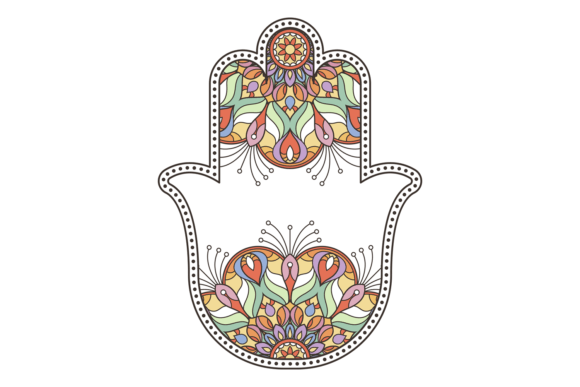
When you look at the Hamsa Hand Symbol. Ethnic Decorative Orn, the first thing you notice is the intricate detailing. These are not simplified, flat icons. Instead, the designs typically feature the symmetrical open palm adorned with complex geometric patterns, florals, and arches that mimic traditional embroidery or metalwork. The style is often described as "ethnic" or "boho," but it fits comfortably under the umbrella of modern typography when used correctly. The file formats—EPS, JPG, SVG, transparent PNG—ensure that whether you are scaling up for a billboard or down for a jewelry tag, the lines remain crisp. The visual personality is one of protection, mysticism, and artisanal craftsmanship.
The appeal lies in its versatility as a vector asset. Because the transparent PNG versions remove the background, these symbols can be layered over photography, texture, or solid color blocks seamlessly. The SVG format is particularly valuable for web designers who need lightweight, scalable graphics that load quickly without losing quality. Unlike a standard serif font or sans serif font, which relies on the uniformity of letters, this decorative set relies on the organic flow of the hand shape combined with rigid geometric filling. It feels personal and handcrafted, qualities that are increasingly sought after in a digital-first world.
Practical Applications for Creatives and Businesses
For logo design and brand identity, the Hamsa offers a distinct advantage for niche markets. Businesses in wellness, yoga, holistic health, ethical fashion, and travel often struggle to find a creative font or icon that feels authentic rather than generic. Incorporating the Hamsa Hand Symbol into a brand mark can instantly communicate a philosophy of mindfulness. However, restraint is key. Using the symbol as a standalone mark or a subtle watermark is often more professional than plastering it everywhere. It works exceptionally well as a "brand stamp" on the back of business cards or as a subtle emboss on packaging.
In packaging design, particularly for products like essential oils, soaps, textiles, or gourmet spices, this symbol adds perceived value. It suggests that the product inside is curated and special. You can use the EPS files to manipulate the vector paths, perhaps isolating just the eye in the center of the hand for a minimalist icon, or using the full hand as a background pattern. For editorial design, such as magazine covers or book jackets focusing on spirituality or culture, the symbol serves as a powerful focal point. It commands attention without needing a loud color palette, often working best in monochromatic schemes like gold foil on navy or black ink on kraft paper.
Digital applications are equally robust. For social media graphics, the transparent PNG allows you to create quick, professional-looking story backgrounds or post headers. Because it is an ornamental amulet, it pairs well with many typefaces. You can place it behind a bold script font for a wedding invitation vibe, or next to a clean modern typography sans-serif for a fashion lookbook. It is a versatile design asset that can be used repeatedly across a campaign without feeling stale, provided you vary the scale and color application.
Strategic Implementation and Font Pairing
Integrating the Hamsa Hand Symbol into your workflow requires a strategic approach to typography. Because the symbol is ornate and detailed, it generally pairs best with typefaces that offer contrast. If you pair it with a highly decorative handwritten font, the result can be chaotic and difficult to read. Instead, consider using a geometric sans serif font for body text. The clean lines of the sans-serif will ground the ornamental nature of the Hamsa, ensuring your message remains legible. For headlines, a sturdy serif font can add a touch of authority, balancing the spiritual softness of the symbol.
When using this asset for web design, keep performance in mind. While SVG is efficient, overloading a page with intricate vector patterns can still impact load times if not optimized. Use the symbol as an accent—a favicon, a section divider, or a hover-state animation—rather than a massive background element. This maintains the professionalism of the site while retaining the unique character of the asset. Think of it as the digital equivalent of a wax seal on a letter; it’s a small detail that elevates the entire experience.
Licensing, Formats, and Professional Standards
Before incorporating the Hamsa Hand Symbol. Ethnic Decorative Orn into a commercial project, due diligence regarding licensing is essential. Most premium font and vector marketplaces offer different tiers for personal and commercial use. If you are a small business owner creating merchandise—such as t-shirts, mugs, or prints—to sell, you must ensure your license covers "print-on-demand" or "unlimited sales." Do not assume that a standard desktop license covers commercial manufacturing. Checking the license protects you legally and respects the artist’s work.
Evaluate the technical specs of the files provided. A comprehensive package should include EPS files for Adobe Illustrator users, SVG for web and UI design, and high-resolution JPGs for quick mockups. The presence of a transparent PNG is non-negotiable for versatility. When you download the asset, take a moment to review the layers in a vector editor. High-quality design assets are usually well-organized, with grouped paths that make it easy to change colors or remove specific decorative elements.
Finally, test the symbol in context. Place your chosen text next to the Hamsa and step back. Does the visual hierarchy work? Is the text readable? Does the symbol distract from the message or enhance it? Good design is about balance. The Hamsa Hand Symbol